
Technology
Tokuyama Dental’s products are built on our proprietary core technologies.
Explore the results of our research and development in areas such as filler design, polymerization technology, and structural color.
Supra-Nano Spherical Filler
A uniform filler of the ideal size for both strength and esthetics

The final finish is determined by the filler
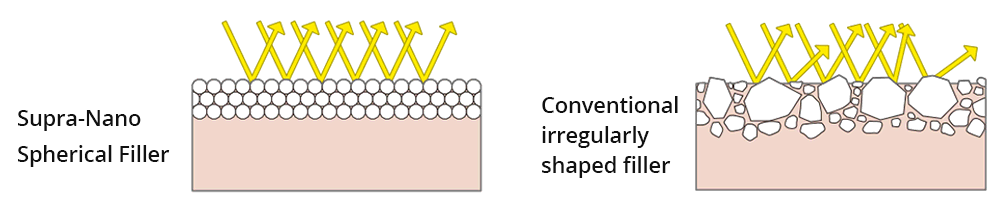
Issues in composite resin restorations—time required for polishing, cloudy finishes, and luster that fades within a few years—stem from the shape and size of the filler particles. Standard fillers are made from crushed quartz or glass, meaning particle size and shape tend to be irregular.
The solution: uniform particles
Supra-Nano Spherical Filler is synthesized using a proprietary sol-gel method in which particles are grown through the dehydration condensation reaction of metal alkoxides. Controlling the process at the molecular level creates nano-sized spherical filler particles.
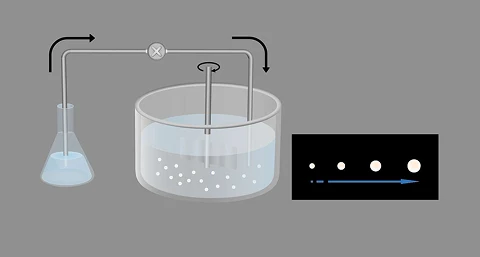
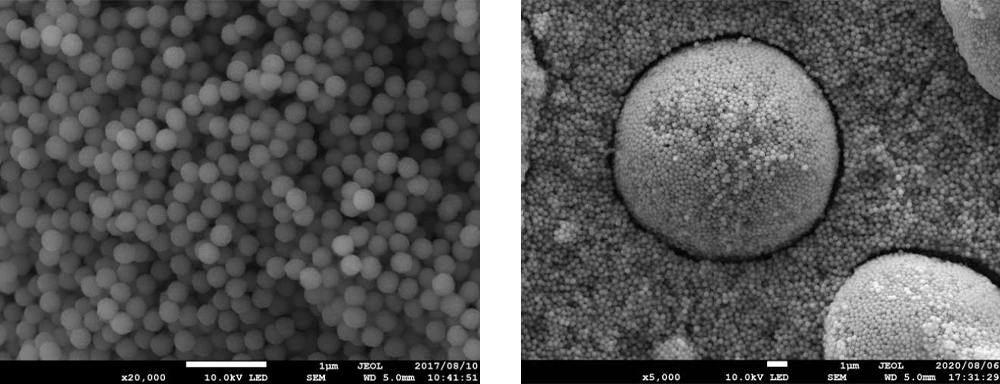
Through this innovative process, Tokuyama Dental has successfully developed a proprietary, ultra-fine spherical filler composed of silicon dioxide (SiO₂) and zirconium dioxide (ZrO₂). Unlike conventional manufacturing methods, the sol-gel method can control particle size and shape with extremely high precision, making it possible to produce a nearly perfectly uniform spherical filler.
Blending this precisely sized, evenly shaped filler at a consistent high density creates smoother surfaces and better polishability. It also gives restorations a shine and translucency similar to natural teeth. All of Tokuyama Dental’s composite resin products use this Supra-Nano Spherical Filler.
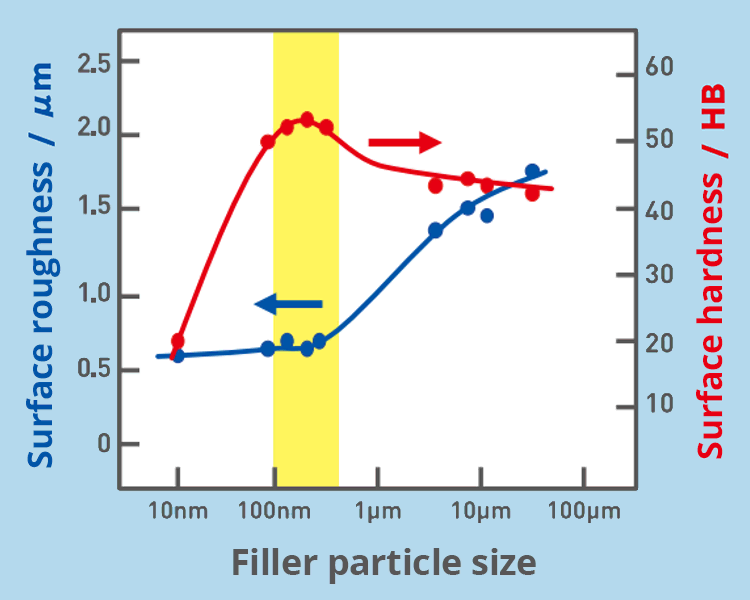
The ideal size for both smoothness and strength
Through this innovative process, Tokuyama Dental has successfully developed a proprietary, ultra-fine spherical filler composed of silicon dioxide (SiO₂) and zirconium dioxide (ZrO₂). Unlike conventional manufacturing methods, the sol-gel method can control particle size and shape with extremely high precision, making it possible to produce a nearly perfectly uniform spherical filler.
Blending this precisely sized, evenly shaped filler at a consistent high density creates smoother surfaces and better polishability. It also gives restorations a shine and translucency similar to natural teeth. All of Tokuyama Dental’s composite resin products use this Supra-Nano Spherical Filler.
Products using this technology (all composite resin products)
Smart Chromatic Technology
More beautiful, more natural—overturning conventions in dental materials
Solving challenges in shade selection
Dentists once had to select a composite resin from as many as 40 shades, making the process time-consuming and prone to shade mismatches. OMNICHROMA, a product built on Smart Chromatic Technology, uses proprietary filler technology to achieve a natural match for the patient’s original tooth color with just one shade.
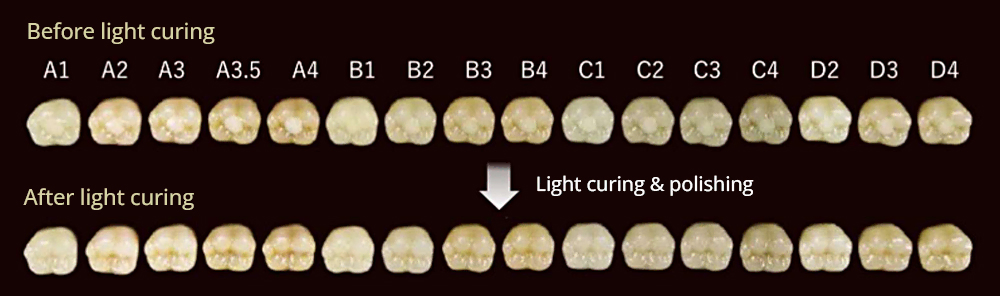
Structural coloration as the key
Structural coloration is not the color of an object itself, but the color produced by microscopic surface structures fine enough to cause light scattering and interference, thus emphasizing specific wavelengths. This differs fundamentally from pigment-based coloration. The wings of a Morpho butterfly, for instance, are in fact dark gray, but their ridged structure reflects and intensifies blue wavelengths when illuminated, making them appear a vivid blue. By focusing on this principle and precisely controlling the particle diameter of spherical fillers, we discovered a composite resin that produces structural color without pigments.
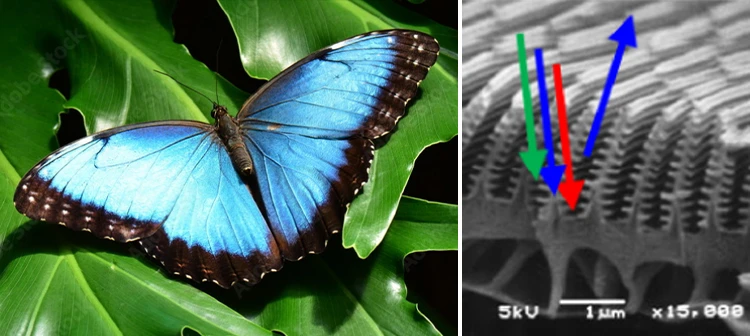
(Photo from The Science of Color; reproduced with partial modification, with permission from Ryuzo Hasegawa, science museum curator, and Dr. Shinya Yoshioka, Tokyo University of Science)
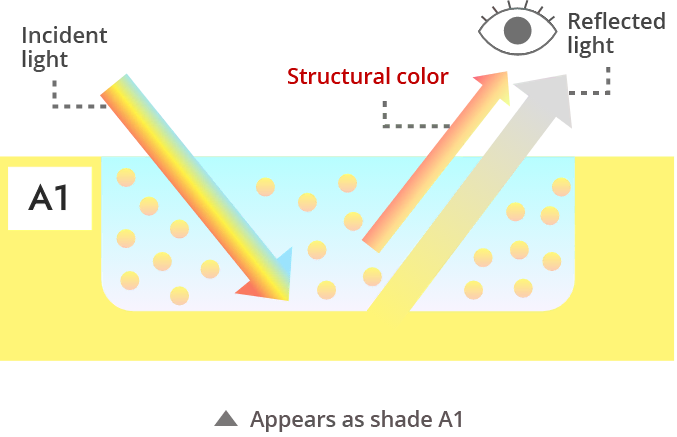
Mechanisms for tooth color matching
Thanks to its uniform particle diameter and perfectly spherical shape, Supra-Nano Spherical Filler reflects and transmits light to match the shade of the surrounding tooth structure. This means a single paste achieves shade-free matching for a wide range of tooth colors.
Products using this technology
BoSE Technology × Contact Cure (Borate Self-Cure)
Stable bonding strength without light curing


BoSE Technology: High Polymerization Activity
BoSE Technology is a proprietary chemical initiator technology that exhibits polymerization activity comparable to that of light-cured systems without the need for light irradiation.
Polymerization proceeds without dependence on light exposure, even in deep or complex cavity areas where light penetration may be limited.
Contact Cure: Polymerization Initiated at the Bonding Interface
Contact Cure is a technology that promotes the polymerization reaction at the interface between a resin material and a bonding agent.
In bonding agents incorporating BoSE Technology, contact between the oxygen-inhibited layer and the restorative resin initiates polymerization from the interface of the restorative resin, resulting in a strong and integrated bond between the restorative resin and the bonding layer.
Products using this technology
