December, 2021
In Japan, “PALFIQUE OMNICHROMA” is sold under the name “OMNICHROMA”, “PALFIQUE OMNICHROMA FLOW” is sold under the name “OMNICHROMA FLOW”, “PALFIQUE UNIVERSAL FLOW” is sold under the name “ESTELITE UNIVERSAL FLOW”, “PALFIQUE LX5” is sold in Japan under the name “ESTELITE Σ QUICK”, “PALFIQUE UNIVERSAL BOND” was sold in Japan under the name “BONDMER Lightless” and “PALFIQUE OMNICHROMA BLOCKER” is sold under the name “OMNICHROMA BLOCKER”.
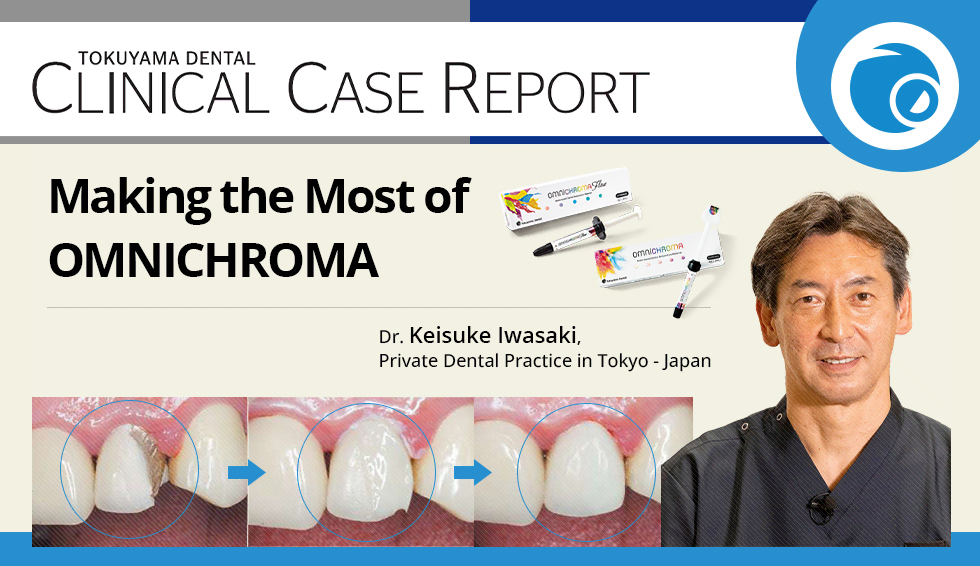
OMNICHROMA, a light-curable composite resin that uses structural color, has been introduced, and I imagine many dentists are already using it in clinical practice. While only the paste had been available previously, the launch of the flowable OMNICHROMA FLOW has dramatically expanded the range of clinical applications. When I first began using OMNICHROMA in my own practice, I was worried about whether a milky white paste could really blend with the shade of the tooth. However, I still recall how impressed I was when the shade blended perfectly after light curing. For small cavities or cases with relatively optical high value, OMNICHROMA alone blends in well, giving satisfying results. That said, questions remain as to whether a single syringe can reproduce every shade. In practice, there are cases where the shade does not quite match, especially in moderate to large cavities. Discussions of OMNICHROMA tend to focus almost entirely on shade, but its physical properties are also on par with or better than previous products, making it an extremely valuable material when used to its full potential.
Case 1: Class I Molar Cavity (Equivalent to A2, No Discoloration)
Re-restoration was planned after the body of the metal inlay in a molar fractured. The metal inlay was carefully removed, the carious lesion was checked and eliminated, and the enamel cavity margin was then finished. While the shade did not need to be scrutinized using a shade guide, an overall visual check was still necessary. In this case, the tooth shade (value) was equivalent to A2 and the cavity was classified as Class I, with no discoloration or other defects. Therefore, it was determined that restoration with OMNICHROMA alone would be sufficient.
After enamel etching, the tooth surface was treated with BONDMER Lightless. Next, lining was performed using OMNICHROMA FLOW. The cavity was then filled with OMNICHROMA in separate buccal and palatal increments, followed by light curing after each layer. After contouring and occlusal adjustment, the restoration was completed with final polishing. The postoperative photograph demonstrates good shade blending, and no functional concerns were noted.
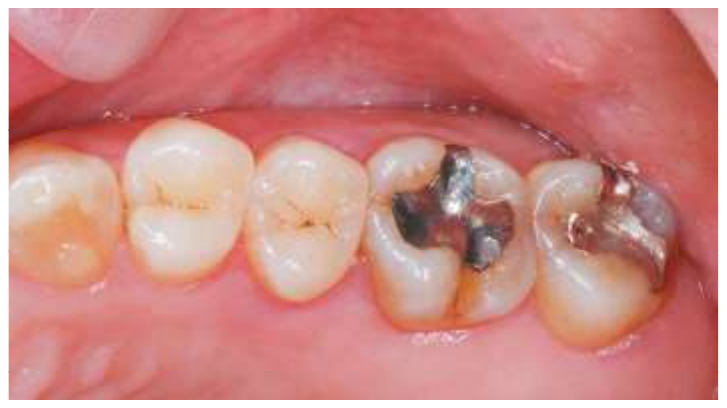
Fig. 1 Preoperative
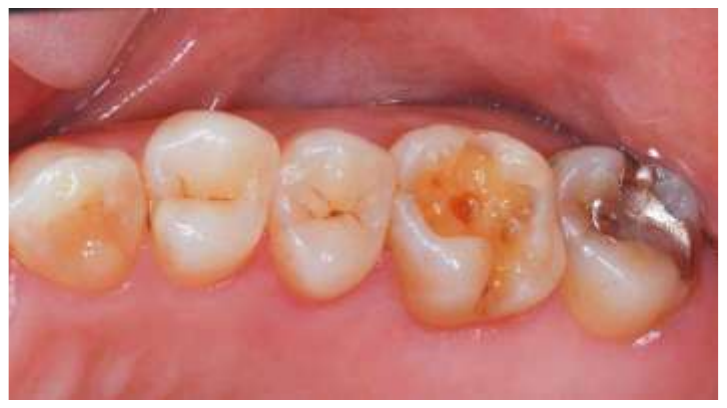
Fig. 2 Cavity preparation
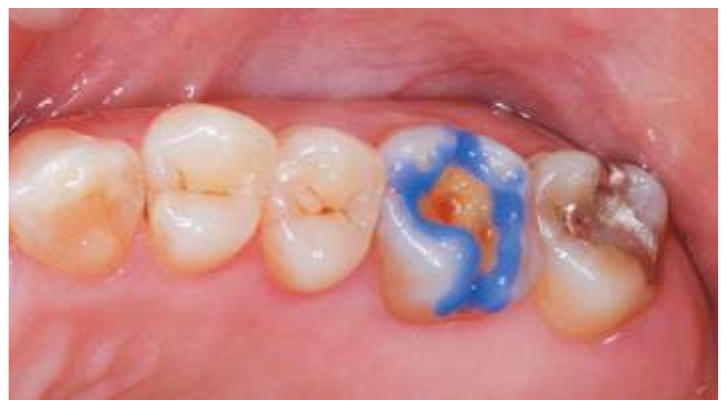
Fig. 3 Enamel etching
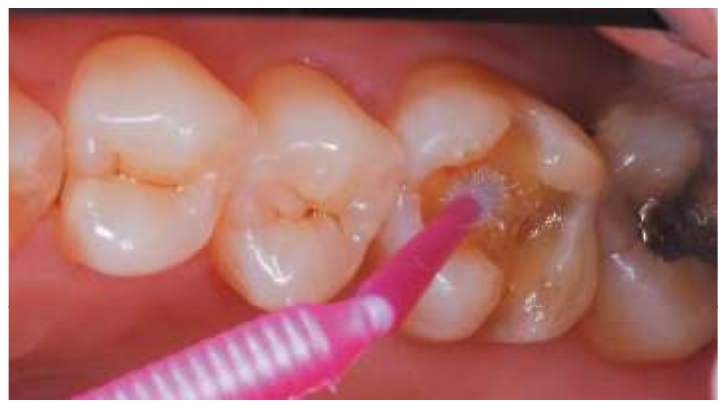
Fig. 4 BONDMER Lightless application
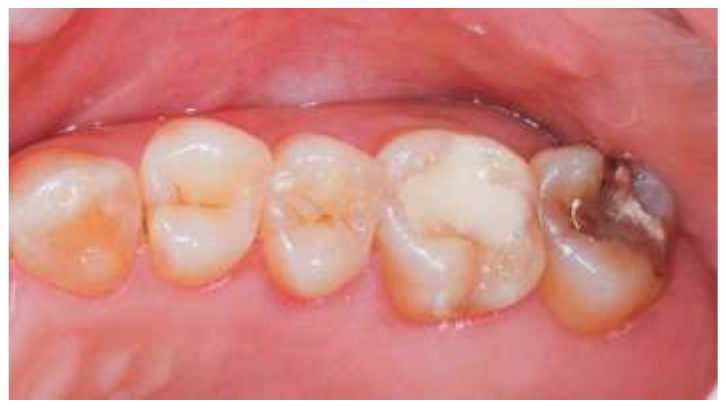
Fig. 5 Lining with OMNICHROMA FLOW
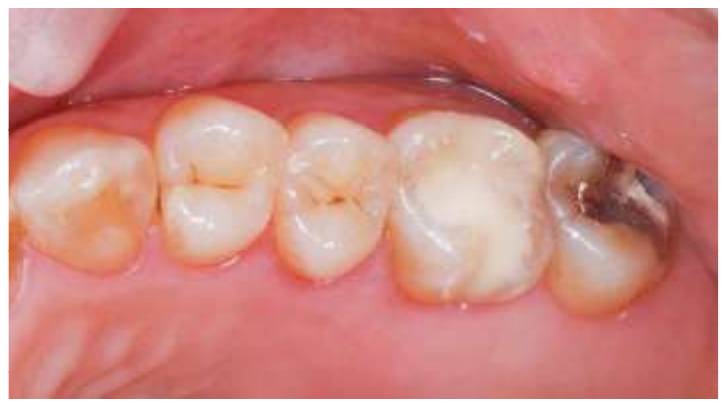
Fig. 6 Filling with OMNICHROMA
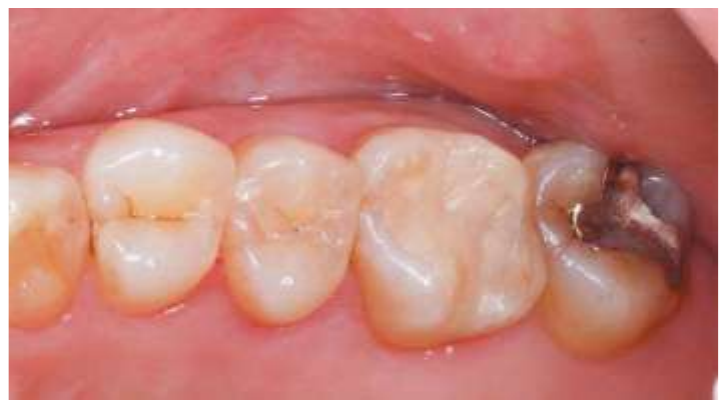
Fig. 7 Polished after light curing to finish
Case 2: Class II Premolar Cavity (Equivalent to A3, No Supporting Tooth Structure, No Discoloration)
Caries was found on the distal proximal surface of a mandibular premolar, and restorative treatment was planned. The cavity was opened, the carious lesion was removed, and the enamel cavity margin was adjusted. An overall check of the shade at this point showed a tooth shade (value) close to A3, with the cavity classified as Class II. Although there was no supporting tooth structure, there was no significant staining, metal color, or other factors requiring shade masking; therefore, the cavity was filled with OMNICHROMA alone. After enamel etching, the tooth surface was treated with BONDMER Lightless, followed by matrix band placement and tooth separation. OMNICHROMA FLOW was then used to fill the cavity in increments through a process of repeated filling and light curing, with the occlusal surface filled last. Finally, contouring, occlusal adjustment, and polishing were carried out as usual. The shade after filling blended well with the tooth structure, and the case was completed successfully.
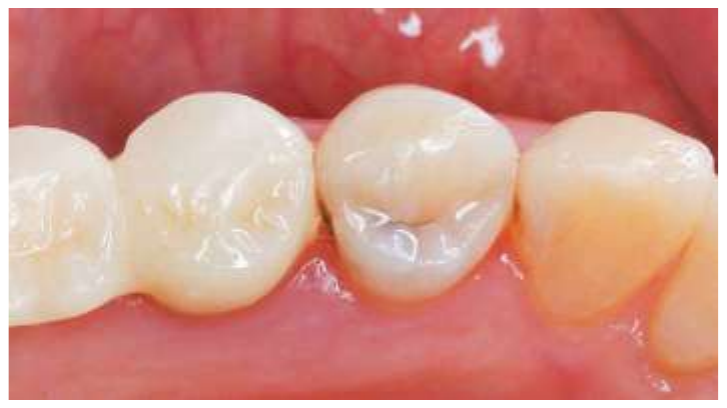
Fig. 1 Preoperative
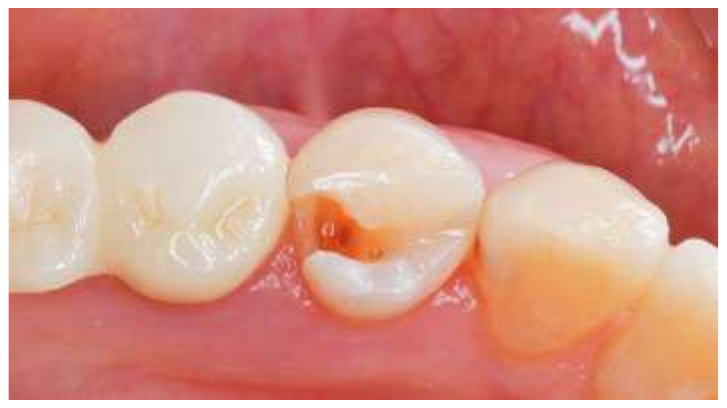
Fig. 2 Cavity preparation
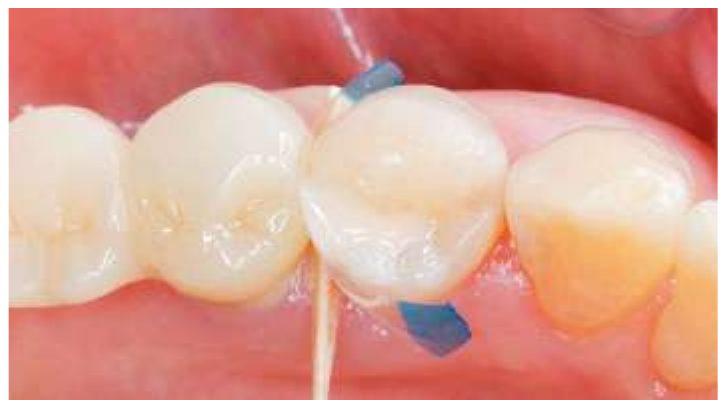
Fig. 3 Matrix band placement and tooth separation after BONDMER Lightless application, followed by incremental filling with OMNICHROMA FLOW
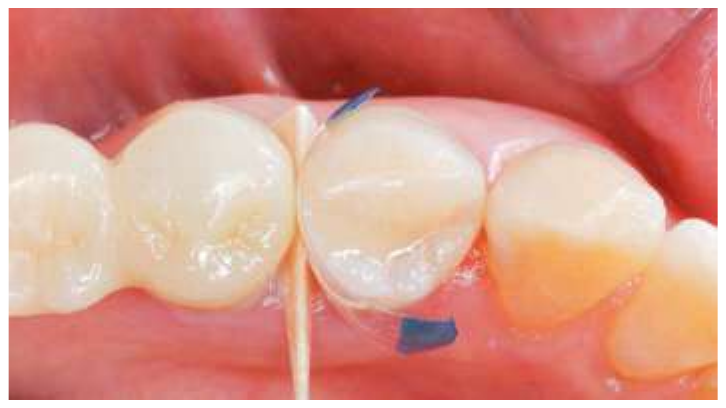
Fig. 4 Filling of the occlusal surface
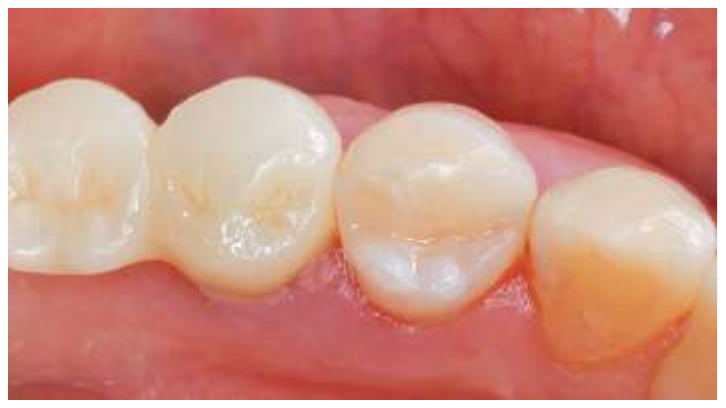
Fig. 5 Polishing to finish
Case 3: Class II Premolar Cavity (Equivalent to A3, No Supporting Tooth Structure, With Discoloration)
This case involves a mandibular premolar with caries found on the mesial proximal surface that required restorative treatment. The steps including opening the cavity, removing the carious lesion, and finishing the enamel cavity margin are identical to Case 2. Visual inspection of the cavity at this point showed a tooth shade (value) equivalent to A3, and the cavity classified as Class II. There was no supporting tooth structure and no discoloration was found, but a metal inlay was visible in the adjacent area. In cases like this, the color of the metal must be masked using a blocker or similar material. Neglecting this may result in the metal color showing through and disrupting shade matching. Therefore, the restoration was performed using OMNICHROMA BLOCKER along with OMNICHROMA.
The tooth surface was treated with BONDMER Lightless and a matrix band was placed, with OMNICHROMA BLOCKER applied as a thin outermost layer on the proximal surface. Care was taken not to layer it too thickly, ensuring the amount was sufficient to mask the metal color. Next, the occlusal surface, now reduced to a simple cavity, was filled in increments with OMNICHROMA FLOW with light curing, followed by contouring, occlusal adjustment, and polishing. The post-restoration shade blended well with the tooth structure, and no concerns were noted.
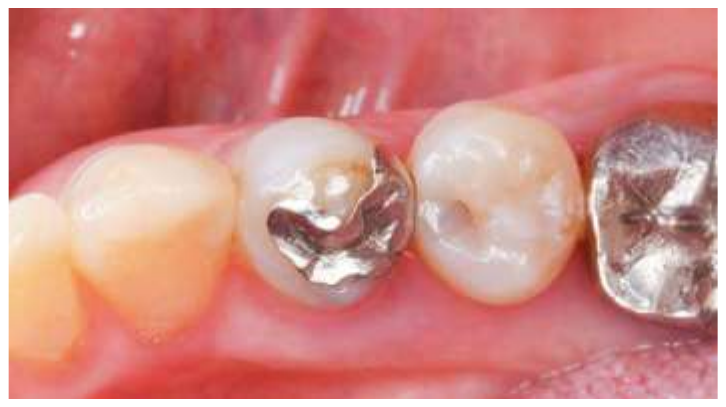
Fig. 1 Preoperative
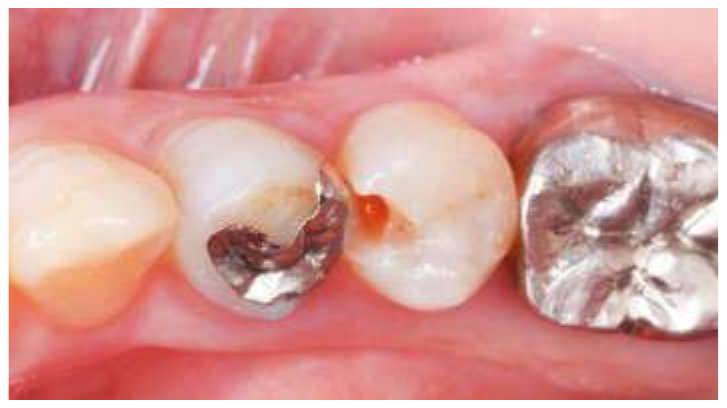
Fig. 2 Cavity preparation
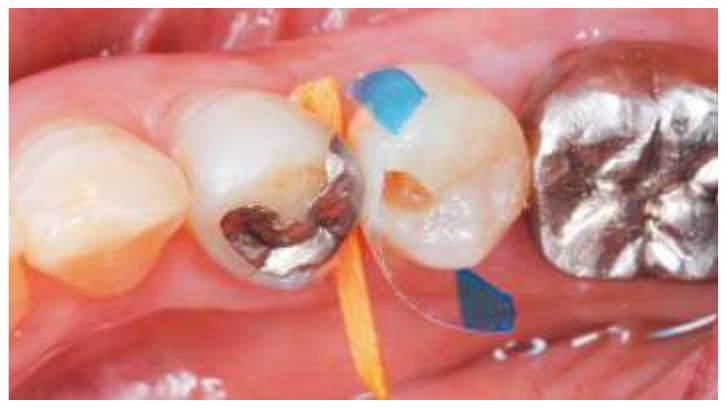
Fig. 3 Tooth surface treated with BONDMER Lightless, followed by matrix band placement and a thin layer of OMNICHROMA BLOCKER on the proximal surface
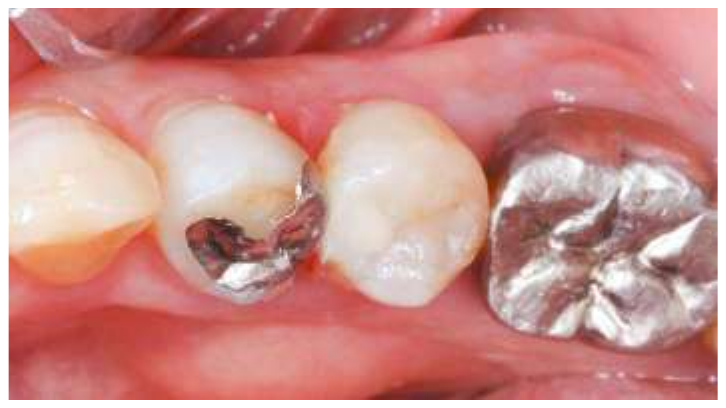
Fig. 4 Incremental filling with OMNICHROMA FLOW
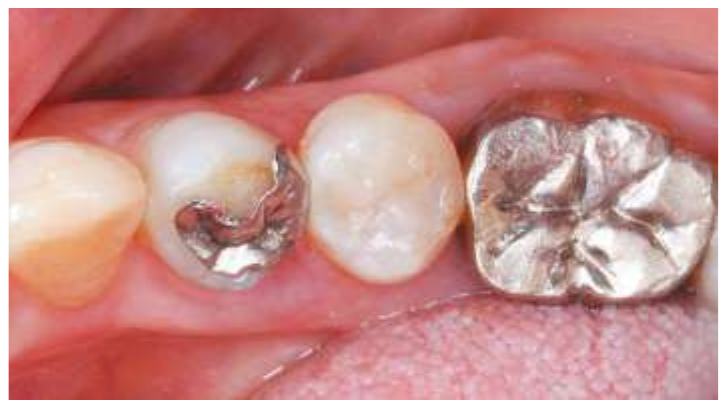
Fig. 5 Polished after light curing to finish
Case4: Class II Premolar Re-Restoration (Lower Value Than A3, No Supporting Tooth Structure, With Discoloration)
This case report describes a re-restoration prompted by a chief complaint of esthetic dissatisfaction with the distal surface of a mandibular premolar. The shade-mismatched distal restoration and underlying carious tooth structure were removed, and the enamel cavity margin was finished.
After enamel etching, the tooth surface was treated with BONDMER Lightless, and a matrix and wedge were used to secure the band. In this case, the crown’s value was lower than A3, and I felt care was needed to avoid picking up the brighter shade of the adjacent molar. In addition, since discoloration was present within the cavity, masking and shade adjustment were performed using the conventional composite resins ESTELITE UNIVERSAL FLOW Medium OPA3 and ESTELITE® SIGMA QUICK A3.5 rather than OMNICHROMA BLOCKER; the restoration was then finished with OMNICHROMA FLOW.
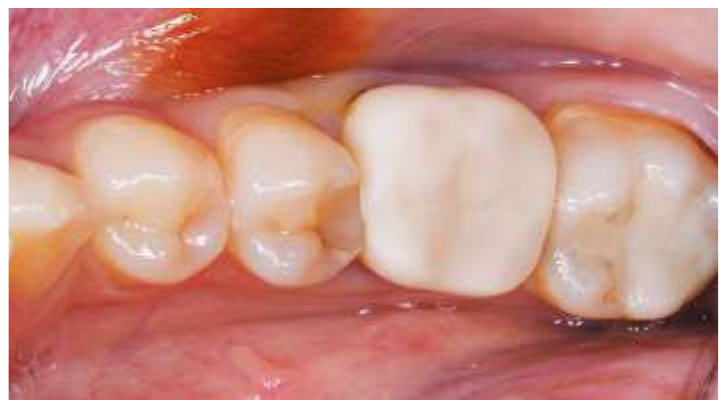
Fig. 1 Preoperative
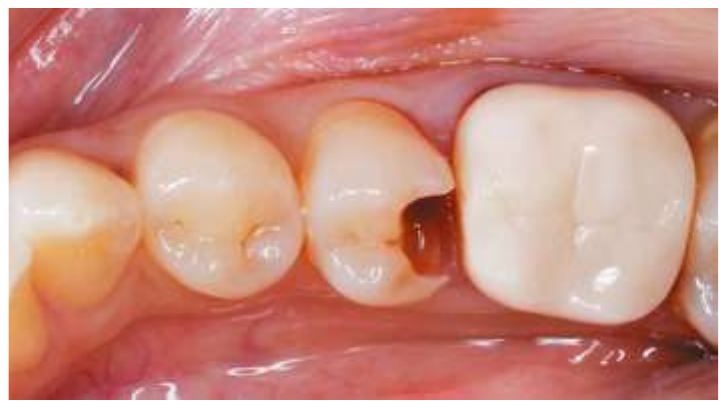
Fig. 2 Cavity preparation
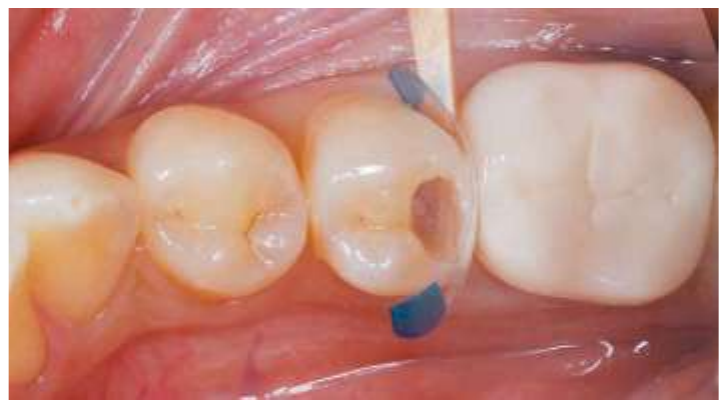
Fig. 3 Filling with ESTELITE UNIVERSAL FLOW Medium OPA3 and ESTELITE Σ QUICK A3.5
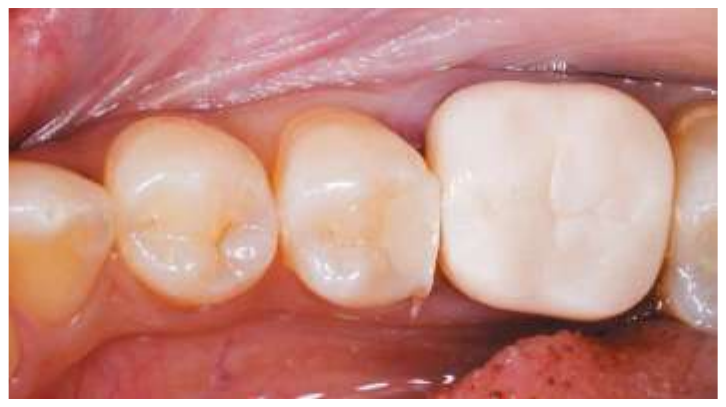
Fig. 4 Filling with OMNICHROMA FLOW
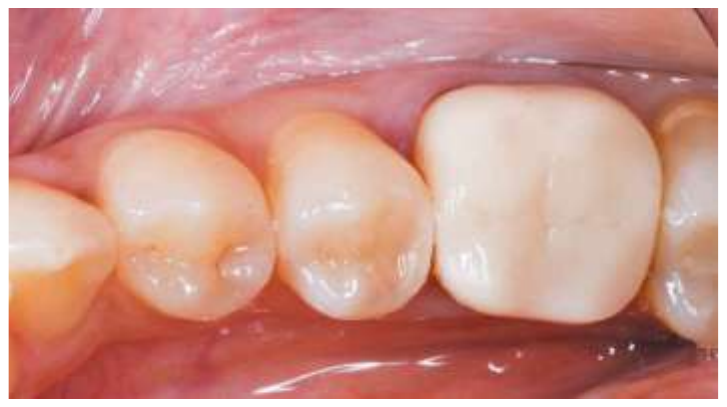
Fig. 5 Polished after light curing to finish