July, 2026
“PALFIQUE™ ASTERIA” is sold in Japan under the name “ESTELITE ASTERIA™”, and “PALFIQUE™ UNIVERSAL FLOW” is sold under the name “ESTELITE UNIVERSAL FLOW™” .
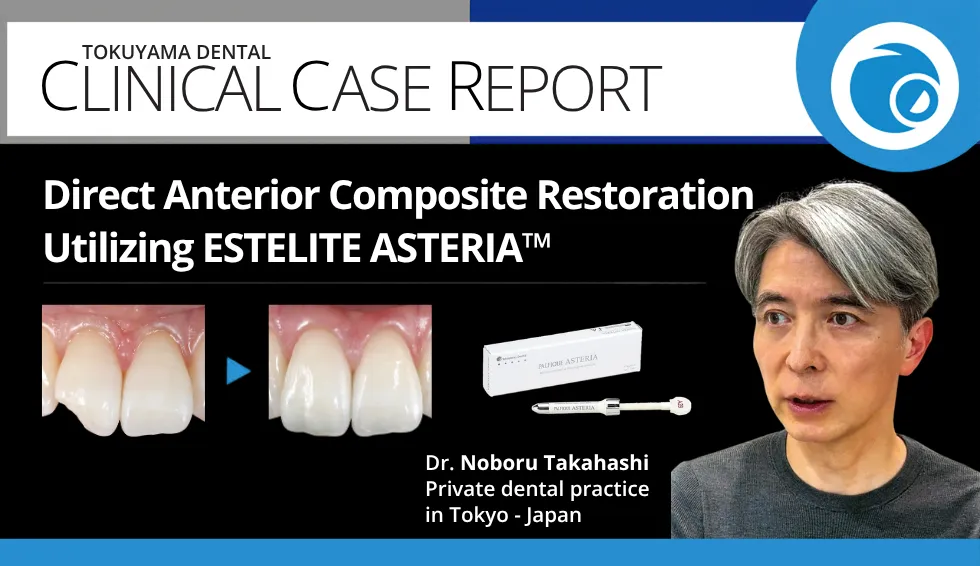
Direct Anterior Composite Restorations are an essential treatment option which can achieve highly esthetic results with enhanced durability and a minimally invasive approach. In general, predictable results of this procedure require a comprehensive understanding of color, shape, and function of anterior dentition as well as the skilled technique of the clinician. In particular, multi-layering techniques to mimic the natural appearance of dentition are sometimes an issue that troubles dental clinicians. ESTELITE ASTERIA™, co-developed by both the author and Tokuyama Dental is designed to establish highly esthetic anterior and posterior restorations with a simplified technique of one or two layers. The optical properties of ESTELITE ASTERIA™, such as the refractive index and diffusion effect, are controlled to achieve a natural appearance, which has enough opacity and some translucency of anterior dentition with a single shade restoration.
In cases where ESTELITE ASTERIA™ is utilized, fewer tints and modifiers may be needed due to its natural chroma. The enamel shade of ESTELITE ASTERIA™ should be applied to the incisal area for cases requiring the appearance of distinct translucency.
In this article, the basic technique to utilize ESTELITE ASTERIA™ for anterior class IV restoration is described.
The patient regained her smile with simplified restoration technique developed by the author.
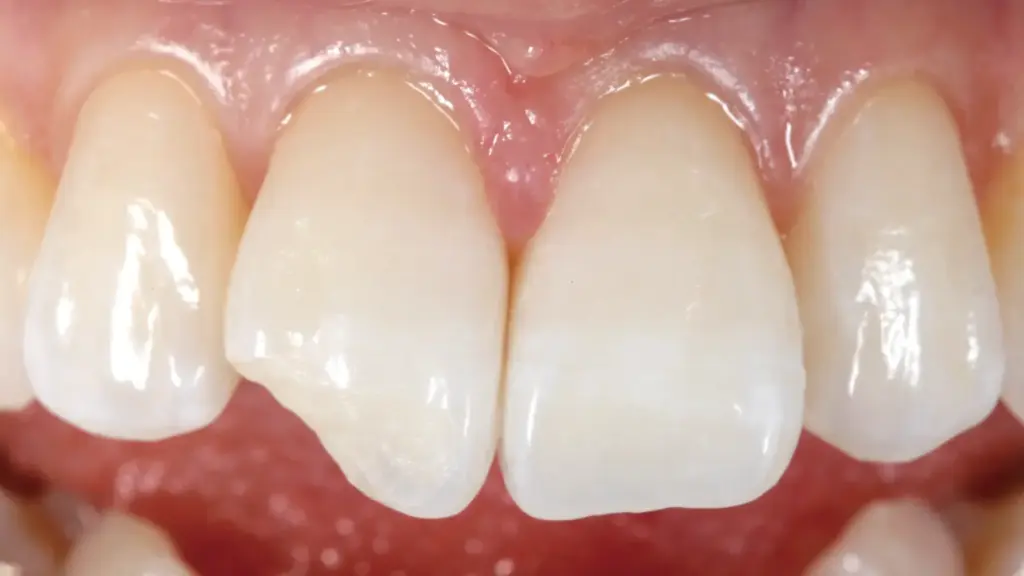
Fig 1.
A 28-year-old female patient presented with a tooth fracture of the maxillary left central incisor. The tooth responded normally to the electric pulp tester. The patient desired a minimally invasive treatment. A direct composite restoration was selected as a definitive treatment option. The simplified two-layer method using ESTELITE ASTERIA(shades BL and WE) was planned. Tints and modifiers are typically not required when restoring normal-colored anterior teeth with ESTELITE ASTERIA.
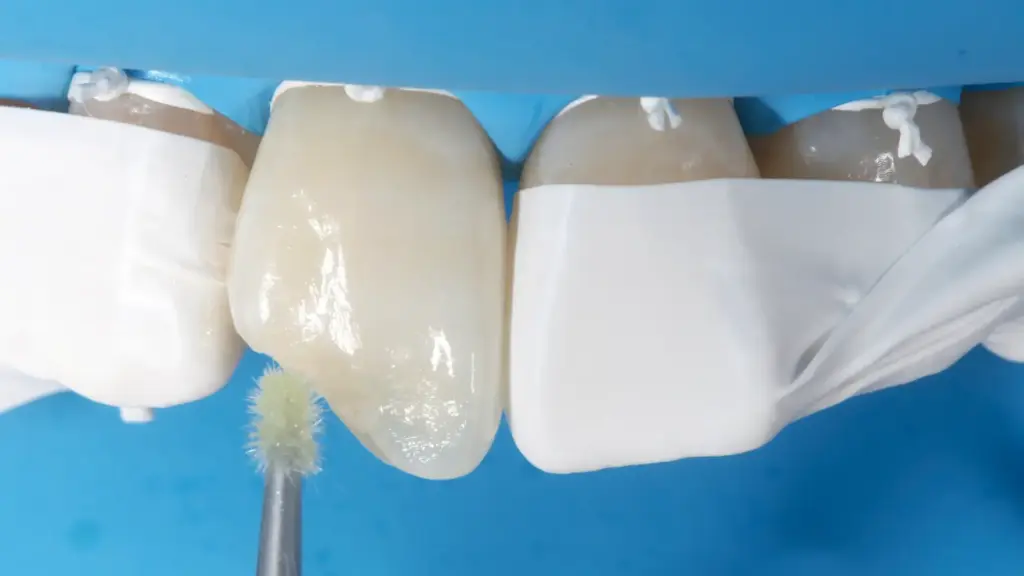
Fig 2.
Rubber dam isolation was performed following the administration of local anesthesia. The adjacent teeth were protected with teflon tape. Bevel preparation on the labial cavo-surface was performed and the tooth surface was prepared before applying the adhesive.
The bonding procedure was carried out step by step: enamel etching with 35% phosphoric acid for 15 seconds, followed by water rinsing, air drying, and application of bonding agent.
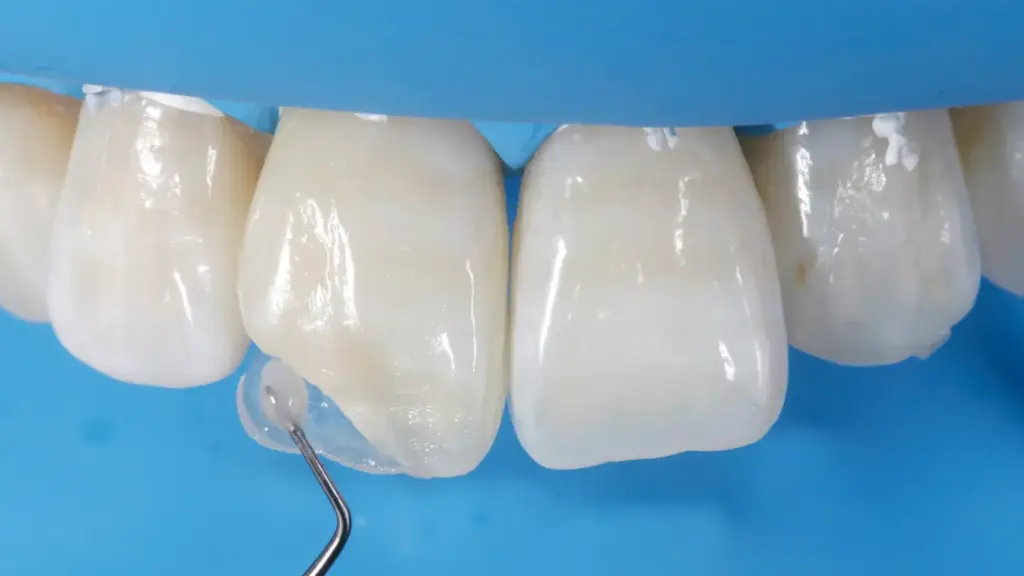
Fig 3.
The palatal shelf was created utilizing a silicone matrix. ESTELITE ASTERIA (shade WE) was selected for this step with an ideal thickness of about 0.3-0.5mm.
Following the polymerization of the WE layer, lining was performed with ESTELITE UNIVERSAL FLOW High Flow A2. This layer should be kept thin as well. Light-curing was performed for 10 seconds.
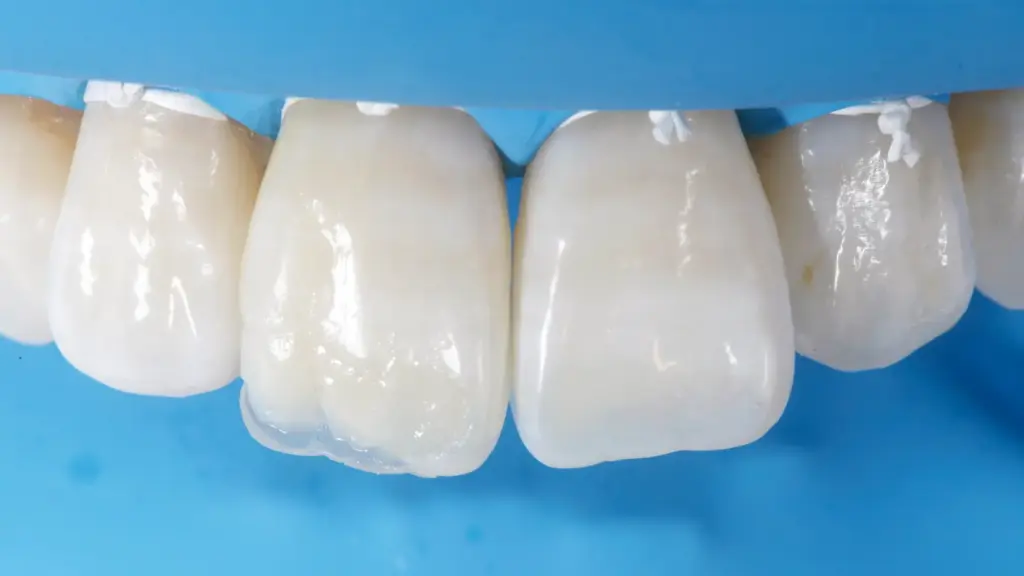
Fig 4.
The body shade of ESTELITE ASTERIA has some translucency, so most of the missing tooth structure should be restored with a body shade even if it is an enamel layer.
Body shade BL was applied up to the cavo-surface margin, then three characteristic mamelons were created on the incisal edge and space was left for the translucent enamel shade. Light-curing was performed for 10 seconds.
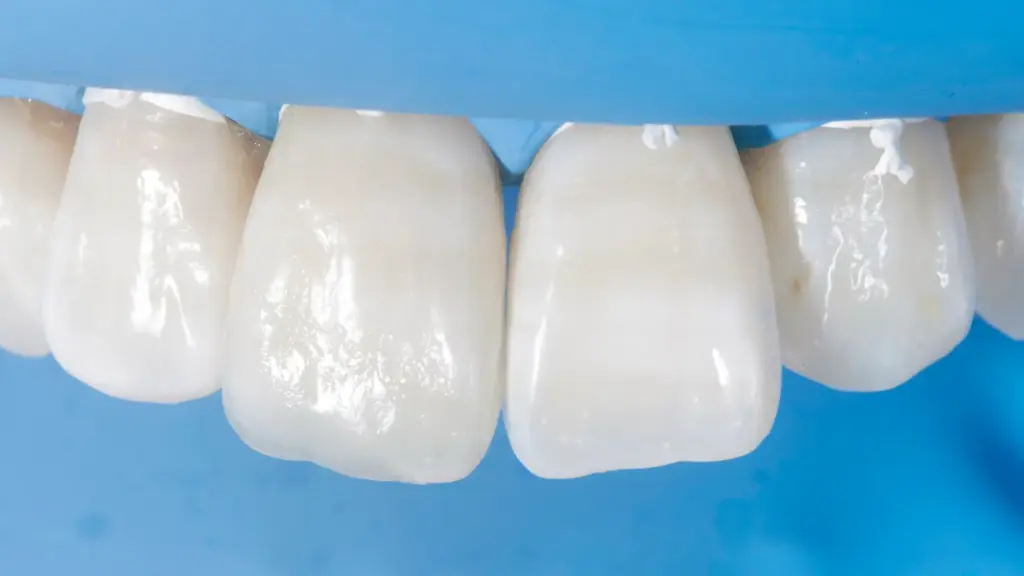
Fig 5.
Enamel shade WE was applied to the incisal edge to recreate the natural translucency. The overall anatomical morphology of the restored tooth was evaluated. A small amount of WE can be applied where additional material is necessary to correct the contour. Following adequate light-curing, finishing and polishing procedures were performed.
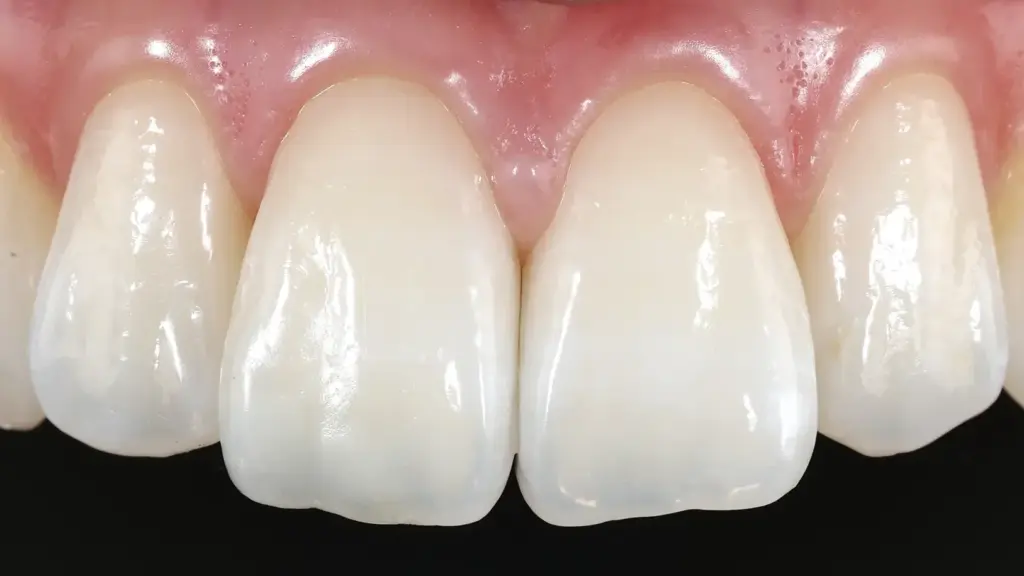
Fig 6.
Photograph taken two weeks after the procedure.
Beautiful incisal translucency was established with only two shades: BL and WE. The patient reported no pain or discomfort. The excellent postoperative outcome achieved with ESTELITE ASTERIA demonstrates seamless integration with the natural dentition, both aesthetically and biologically.